Loading...
Serving Rapid City, SD and surrounding areas. (605) 646-9616
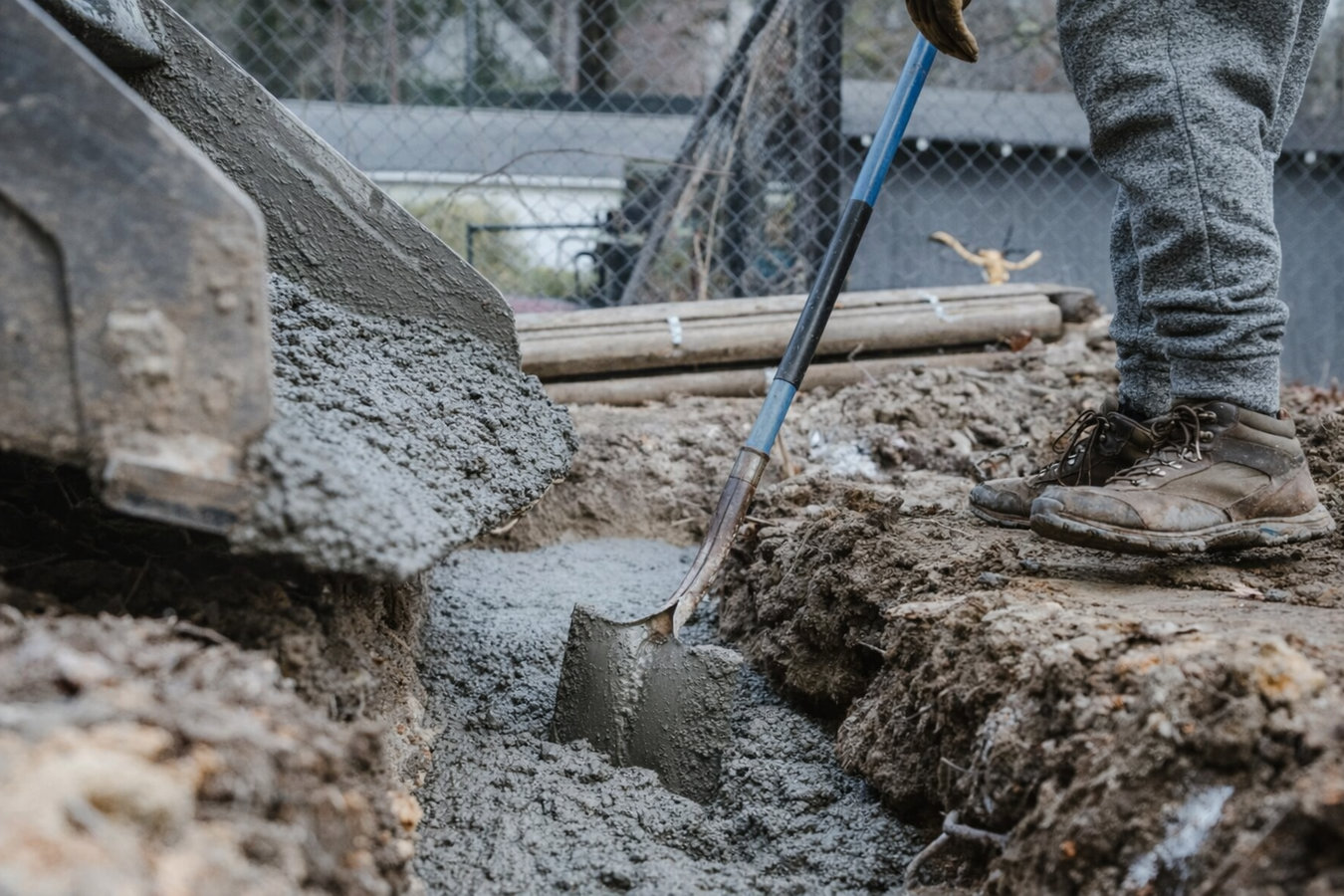
Footings that are not deep enough for South Dakota winters will shift, tilt, and fail. We pour concrete footings in Rapid City dug to the right depth for this climate so your deck, addition, or garage stays level for decades.
Concrete footings in Rapid City are the underground bases that hold up structures - decks, additions, garages, and homes. They must be dug below the frost line to prevent the ground from freezing, expanding, and pushing them upward. Most residential projects here take one to three days of active work plus a curing period before the structure above can be built.
In Rapid City, the frost line sits at roughly 36 to 42 inches below grade - deeper than in most parts of the country. A footing that does not reach that depth is vulnerable to frost heave, which is when frozen soil expands and pushes the footing up. Over a few winters, that movement tilts decks, cracks garage slabs, and pulls additions away from the main house. Many homeowners in established neighborhoods like those near Canyon Lake and the West Boulevard corridor are dealing with older structures whose original footings were never deep enough by current standards.
Getting footing depth right from the beginning is the single most important factor in how long a structure holds up in this climate. If you are also planning a larger structural project, our slab foundation building service handles full slab pours for garages, shops, and new construction.
If one side of your deck sits noticeably lower than the other, or a gap is opening up between your steps and the house, the footings underneath may have shifted. In Rapid City, this often happens after a hard freeze-thaw cycle when shallow footings get pushed by the soil. A tilting deck is not just cosmetic - it becomes a safety hazard.
When a footing settles unevenly, the structure above it moves with it - and the first place you notice is usually in your doors and windows. If a door that used to close easily now drags at the top or bottom, or a window frame looks visibly out of square, the foundation below may be the cause. This is common in Rapid City neighborhoods where original footings were not deep enough for current frost conditions.
Diagonal cracks - especially ones wider at one end - often signal that one part of the foundation has moved more than another. This can happen when a footing beneath that section has settled, heaved, or deteriorated over time. Vertical cracks can sometimes be normal as concrete cures, but diagonal cracks deserve a professional look.
Any new structure that carries significant weight needs proper footings before anything else is built. Using surface-level post anchors instead of buried footings is a shortcut that tends to fail within a few years in South Dakota's climate. Getting the footings right is the first decision, not an afterthought.
We pour concrete footings for residential structures throughout Rapid City and the Black Hills area. Every project includes utility marking before any digging begins, excavation to the correct frost-line depth, forming, steel reinforcement where required, and the pour itself. We coordinate the required city inspection before concrete is placed so the depth and placement are verified on record before anything is buried underground.
For larger structural work that goes beyond individual footings, our foundation raising service covers existing foundations that have settled or shifted, and our slab foundation building service handles full slab pours for new garages, shops, and additions.
For homeowners building a new deck or replacing a deteriorated structure that needs proper footings for this climate.
For new detached garages, workshops, and accessory structures that require code-compliant footings before framing begins.
For homeowners adding on to an existing home who need new footings that meet current depth and bearing requirements.
For older structures in established neighborhoods where original footings may be shallower than current standards require.
The combination of a deep frost line and variable soil makes Rapid City one of the more demanding environments for footing work in the region. At the edge of the Black Hills, the ground can shift from soft clay to dense limestone within a few feet - the kind of variability that affects excavation time, equipment needs, and how the footing is designed. Clay-heavy soil expands when wet and shrinks when dry, which puts stress on a footing from below if the base was not accounted for in the design. Rapid City is also known for dramatic temperature swings - sometimes 40 to 50 degrees in a single day - which affects when it is safe to pour concrete and how the mix should be specified.
We work on footing projects across the metro area, including properties in Sturgis to the north and Spearfish to the northwest, where the same frost depth and soil conditions apply. If you are in one of Rapid City's older established neighborhoods and adding on to an existing home, confirming that new footing work meets current depth requirements is an important early step - one that the permit process will verify before any concrete is placed.
Reach out by phone or through our contact form. We respond within 1 business day, ask about your project, and schedule a site visit to give you an accurate written estimate.
We walk the site, check for underground utilities, and assess soil conditions before quoting. We handle the City of Rapid City permit application - that is our responsibility, not yours.
The crew digs to the required depth below the frost line, sets forms, and places reinforcing bars where the project calls for it. A city inspector verifies depth and placement before any concrete is poured.
Once the inspection is approved, we pour and finish the footings. Full strength takes about 28 days. We give you a written timeline and confirm when the structure above can be built.
Free written estimates. We respond within 1 business day. No obligation to move forward.
(605) 646-9616In Rapid City, footings need to go 36 to 42 inches down to clear the frost line. We do not skip that depth to save time on the excavation - shallow footings in this climate are one of the most common reasons structures shift within the first few winters.
We handle the City of Rapid City permit application on every structural project. The permit process requires an inspector to verify footing depth before concrete is poured - which means your work has an independent check built in.
We have worked on properties across Rapid City and the Black Hills area since 2023. The soil variability in this region - from clay-heavy ground to limestone bedrock within a few feet - is something we assess on every job, not something we work around after the digging starts.
We assess your specific soil and dig depth before giving you a number. Rocky terrain near the Black Hills foothills can add excavation time and equipment cost. You deserve a written estimate that reflects your project - not a generic per-square-foot quote that changes once the crew finds rock.
The American Concrete Institute publishes standards for footing design and cold-weather concrete procedures that inform how we specify mixes and schedule pours in Rapid City's variable spring and fall conditions. Combined with our South Dakota contractor license and local experience, that foundation of knowledge is what separates footing work that lasts from work that starts failing after the first hard winter.
Existing foundation settlement and heaving corrected so your home or addition sits level and stable again.
Learn moreFull slab pours for garages, workshops, and new construction built to handle Rapid City soil and climate conditions.
Learn moreThe permit process takes time, and the digging season here is limited - reach out today so we can assess your site before your project window closes.