Loading...
Serving Rapid City, SD and surrounding areas. (605) 646-9616
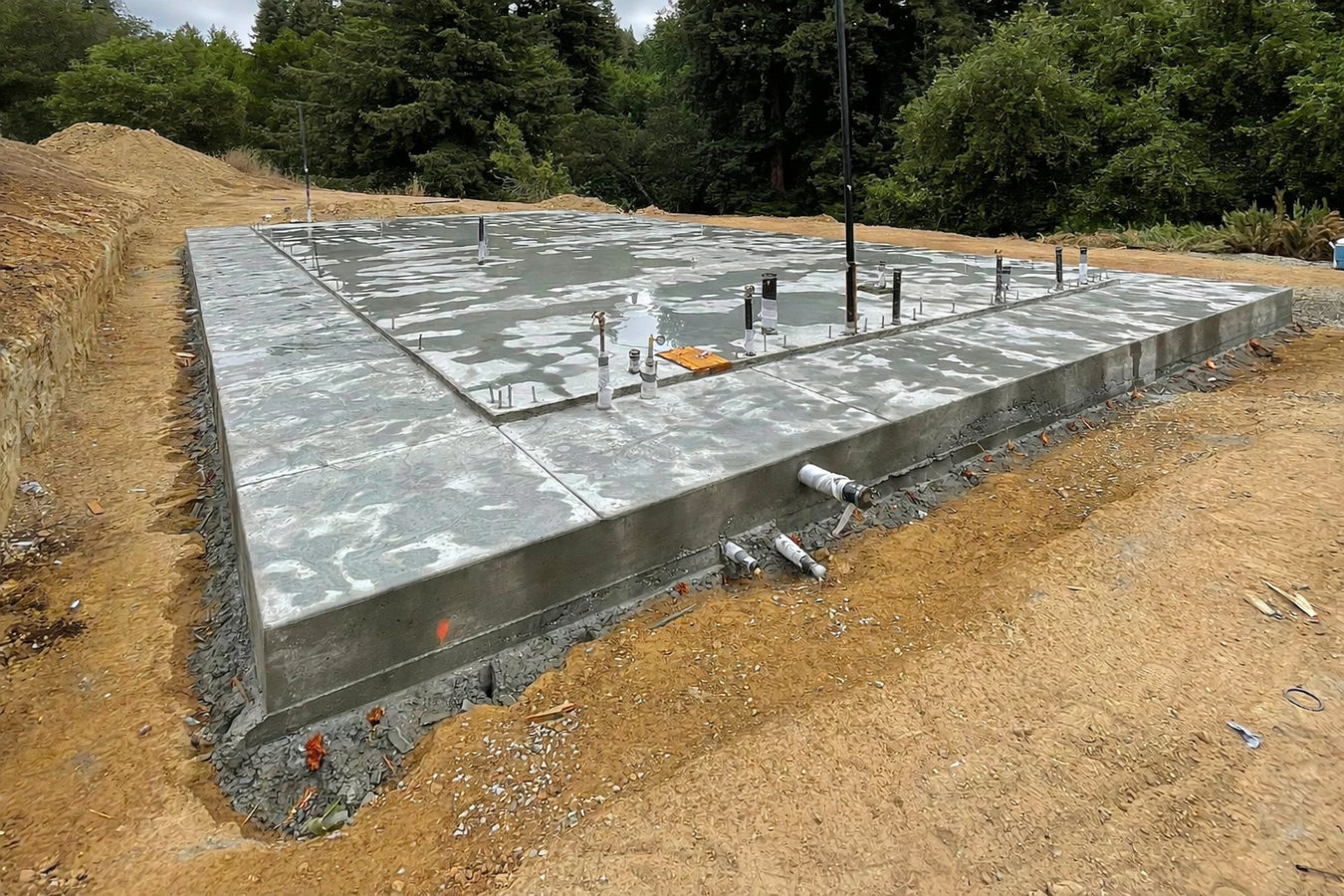
A slab foundation in the Black Hills has to handle deep frost, shifting soils, and hard winters. We build slabs in Rapid City with footings, drainage, and reinforcement matched to your specific site.
Slab foundation building in Rapid City means preparing the ground, setting forms, pouring reinforced concrete with footings that reach below the local frost line, and curing the slab properly - most home-sized projects take two to four weeks from permit application to a finished, inspection-passed foundation.
A slab is a single flat layer of concrete that acts as both the floor and the structural base of your home. There is no crawl space or basement - the house sits directly on the concrete. This type of foundation works well in the Rapid City area, especially on lots where the rocky Black Hills terrain makes deep excavation expensive or difficult.
The biggest variable in this region is soil. Parts of Rapid City sit on Pierre shale and clay-heavy ground that moves with moisture changes, which is why the gravel drainage layer and footing depth matter more here than in milder climates. If your project also involves below-grade work, our foundation installation service covers poured concrete basement and crawl space wall systems as well.
The most direct reason to have a slab built is that you are starting a new structure - a home, a garage, a workshop, or an addition. Without a proper foundation, no structure can be safely built or permitted in Rapid City. If you are at the planning stage of any new construction, the slab is the first physical step after the lot is prepared.
Small hairline cracks are normal, but cracks wider than about a quarter inch, running diagonally from corners, or where one side sits higher than the other signal foundation movement. In Rapid City, this is often caused by freeze-thaw cycles working on shallow footings or expansive clay shifting beneath the slab. A crack that was not there last year or seems to be lengthening is worth a professional look.
When a slab shifts or settles unevenly, the house frame above it can rack out of square. The first sign is often a door or window that suddenly sticks, gaps at a corner, or will not latch the way it used to. In Rapid City, this symptom often appears in spring after frost heave has pushed part of the foundation up and then let it back down.
If water collects against the base of your exterior walls after rain, or if you see a white chalky residue on interior concrete floors, drainage around your slab may be failing. Rapid City heavy summer storms and spring snowmelt can overwhelm a foundation that was not graded or drained properly. Addressing this before water erodes the soil beneath the slab is far less expensive than waiting.
We handle the full scope of slab foundation work for residential projects in Rapid City and the Black Hills area - site clearing, grading, footing excavation to the required frost depth, gravel base and moisture barrier installation, forming, rebar or wire mesh placement, the pour, and surface finishing. Every slab is built with control joints to give the concrete a planned place to flex through freeze-thaw cycles. We pull the required City of Rapid City building permit and schedule all required inspections before work begins.
For homeowners adding a detached garage, workshop, or outbuilding, we build standalone slabs designed for those specific loads and uses. Our concrete footings service is available as a standalone option for projects that need footing work separate from a full slab pour. The foundation installation service covers full basement and crawl space wall systems for homeowners who want below-grade living or storage space.
For homeowners building a new residence who need a properly engineered concrete base to start construction.
For detached garages, workshops, or accessory structures that need a dedicated concrete floor and base.
For homeowners extending an existing structure with a new room or attached space that requires its own foundation.
For property owners tearing out a failed or non-compliant old slab and starting fresh to current code standards.
Rapid City sits at roughly 3,200 feet in elevation and sees frost depths that reach 42 to 48 inches in a hard winter - deeper than most of the country. That means the footings on your slab must be excavated and poured significantly deeper than they would need to be in a warmer state. The extra excavation and concrete are not optional here: shallow footings that sit above the frost line will heave up and down with each freeze-thaw cycle, cracking the slab above them within a few years. Homeowners in newer subdivisions on the north and east sides of Rapid City and on sloped lots near the Black Hills foothills both face site conditions that require careful assessment before any concrete is poured.
The soil story matters just as much as the frost depth. Much of the Rapid City area sits on or near Pierre shale, a clay-rich formation that swells when wet and shrinks when dry. A slab built without accounting for that movement will develop stress cracks from below, not from above. We assess your specific lot before designing the slab so drainage and reinforcement are matched to what is actually under your feet. We serve homeowners throughout the Rapid City metro as well as nearby communities including Box Elder and Sturgis, where many of the same soil and frost conditions apply.
Reach out by phone or through our contact form. We respond within 1 business day, ask a few questions about your project, and schedule a site visit - no commitment required at this stage.
We visit your property, check soil conditions, confirm the layout, and measure the area. You receive a written estimate covering site prep, forming, reinforcement, the pour, and any finishing - no verbal quotes.
We apply for the required City of Rapid City building permit before any digging starts. The city inspector verifies footing depth and reinforcement before the pour - this step protects you and is non-negotiable.
Excavation, gravel base, moisture barrier, forming, and the pour itself typically take three to five days of active work. After a curing period and a passed final inspection, we walk you through the finished slab and provide your permit documentation.
We respond within 1 business day, visit your site, and give you a written estimate with no obligation. No verbal quotes, no pressure.
(605) 646-9616We design every slab with footings that reach at least 42 inches below grade - the local frost line requirement. That depth means the ground can freeze and thaw through every South Dakota winter without pushing your foundation around.
Soil in the Rapid City area ranges from rocky ground near the hills to clay-heavy low-lying lots. We assess your specific site before designing the slab so the gravel base, drainage, and reinforcement match what is actually under your property.
We have worked across Rapid City and the surrounding Black Hills region since 2023. We know the permit office, the soil conditions by neighborhood, and the seasonal window that makes concrete work here succeed or fail.
Every project closes with a passed city inspection and documentation you can give to a future buyer or lender. A contractor who suggests skipping permits is not one worth hiring - and we make sure the paperwork is in order before we leave your property.
South Dakota requires contractors to be licensed through the state, and you can verify any contractor before signing anything at the South Dakota Contractors Licensing program. We follow the concrete design standards published by the American Concrete Institute, which are the same standards your city inspector uses to evaluate the work.
Full poured concrete basement and crawl space wall systems for new homes and additions that need below-grade living or storage space.
Learn moreStandalone footing work for fences, posts, and structures where footings are needed without a full slab pour.
Learn moreConstruction season in the Black Hills fills up fast - reach out now and we will get your project on the calendar before the spring rush closes out.